How to Prevent Stains and Odors on Cutting Boards?

Time:2026-10-03 Author:Isabella
0%

Cutting boards face a quiet daily battle. Raw onions leave sharp odors. Beets create deep red stains. Moisture then settles into knife marks, where careless cleaning may miss it. Learning how to prevent stains and odors on cutting boards starts with understanding these small causes.

A reliable routine begins immediately after food preparation. Scrape away residue, wash the board with hot water and mild dish soap, then rinse it thoroughly. Dry both sides with a clean towel. Let the board stand upright, allowing air to reach every surface. Never store a damp board flat inside a cabinet. That trapped moisture can create unpleasant smells and encourage surface deterioration.

Material also matters. Plastic boards often resist staining better, while wooden boards need regular conditioning with food-safe mineral oil. Use separate boards for raw meat, seafood, and ready-to-eat foods. This simple habit reduces cross-contact risks and keeps strong flavors from spreading. For lingering odors, a light scrub with coarse salt and lemon may help, but it cannot repair deep damage. Replace boards when they develop heavy grooves, cracks, or persistent smells.

Small habits matter most.

Still, no method works perfectly. Even careful cooks sometimes leave a wet board beside the sink overnight. I have found that rushed cleaning causes more trouble than dramatic spills. Inspect the surface regularly, question old routines, and adjust care to the board’s material. A clean appearance is helpful, but it does not always prove true cleanliness. Reliable maintenance depends on consistent washing, complete drying, and honest attention to wear.
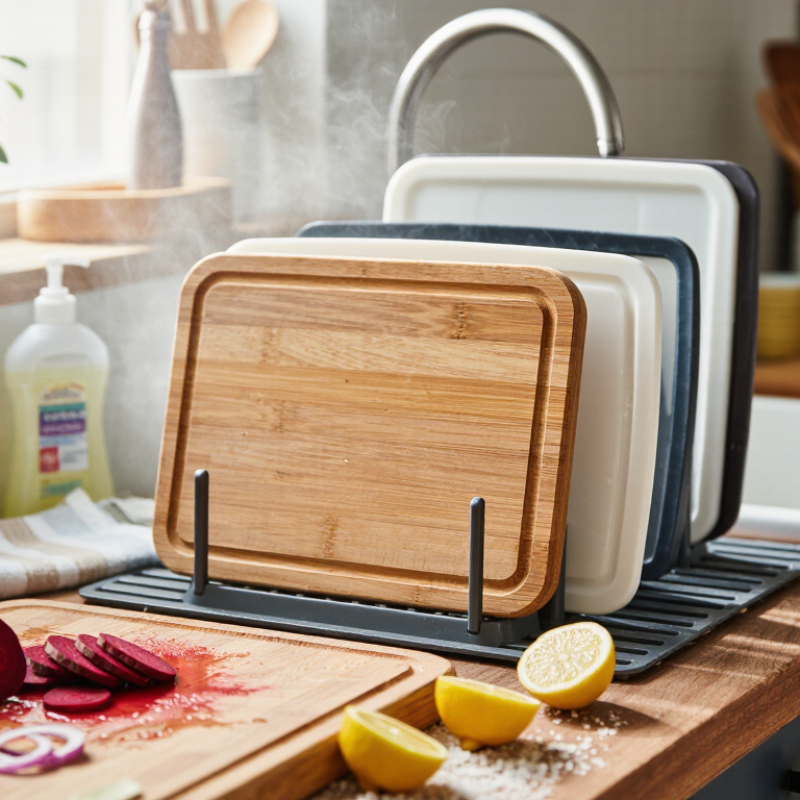
How to Prevent Stains and Odors on Cutting Boards?

Choosing the Right Cutting Board for Stain and Odor Prevention

How to Prevent Stains and Odors on Cutting Boards?

Choosing the right cutting board can prevent many stains and lingering odors. A nonporous plastic board is practical for raw meat because juices cannot soak deeply into its surface. It is also easier to wash thoroughly, especially if it is dishwasher-safe. However, deep knife grooves can trap food residue over time. I once kept using a scratched board too long, and the smell returned after every wash.

A nonporous plastic board is practical for raw meat.

A dense wooden board works well for vegetables, bread, and herbs. Its natural surface feels gentle under a knife, but it needs careful drying after use. Do not leave it beside a wet sink. Choose a thick board that does not flex easily, and avoid boards with visible cracks. Bamboo may resist moisture better than some softer woods, yet quality and surface treatment still matter. Wood is not maintenance-free.

For strong odor control, use separate boards for raw proteins and ready-to-eat foods.

A smaller board for garlic, onions, or fish can limit odor transfer. Wash each board soon after use with hot water and dish soap, then dry it upright. Avoid relying on lemon or salt alone; they may freshen the surface without removing all residue. I sometimes prefer a plastic board for messy ingredients, even though it looks less elegant. Cleanliness matters more than appearance.

Cleaning Cutting Boards Immediately After Each Use

A cutting board begins to hold stains and odors when food residue stays on its surface. Cleaning it immediately after every use interrupts that process. The U.S. Department of Agriculture advises washing boards with hot, soapy water after preparing food, then rinsing and drying them completely. Do not let them sit beside the sink. That damp edge can develop a sour smell overnight.

Use a separate board for raw meat and ready-to-eat foods. After cutting raw poultry, scrub the board with a clean brush, paying attention to knife grooves and corners. The U.S. Food and Drug Administration’s Food Code identifies food-contact surfaces as requiring regular cleaning and sanitizing. Follow the sanitizer’s approved dilution and contact time. More is not always safer.

Dry it upright.

The Centers for Disease Control and Prevention estimates that foodborne illnesses affect about 48 million people in the United States each year. A board is only one possible transfer point, but it deserves attention. I still miss a groove occasionally, especially during busy meal preparation. That is a useful warning, not a failure to hide. Inspect the surface under bright light, and replace it when deep cuts remain difficult to clean. A clean towel helps, but a completely dry board matters more than a quick wipe.

Removing Stains with Safe Household Cleaning Methods

Stains often settle into cutting boards after handling berries, tomatoes, or raw meat. I have found that prompt cleaning works better than aggressive scrubbing later. Rinse the board under warm water, then wash it with dish soap and a clean brush. Avoid soaking wooden boards, because trapped water can cause swelling and cracks.

For dark food stains, spread a paste of baking soda and water over the surface. Leave it for five to ten minutes, then scrub gently with a damp cloth. A small amount of three-percent hydrogen peroxide can help lift stubborn marks on plastic boards. Test it on an unseen area first. Never mix cleaning substances, especially peroxide, vinegar, or chlorine products. Rinse thoroughly afterward.

Odors need a slightly different approach. Sprinkle coarse salt, rub the board with half a lemon, and rinse it well. This method leaves a fresh scent, though it may not remove every smell. Raw meat odors can remain in deep knife cuts. That is a warning sign. Replace a heavily scarred plastic board, or sand a wooden board carefully and reseal it with food-safe mineral oil. I sometimes underestimate drying time. A board should stand upright until completely dry, not rest flat against a damp counter.cuntegn

How to Prevent Stains and Odors on Cutting Boards? - Removing Stains with Safe Household Cleaning Methods

Cleaning Goal Safe Household Method How to Use It Suitable Board Materials Recommended Timing Important Precaution
Routine cleaning after food preparation Warm water and mild dish soap Scrub all surfaces, edges, and grooves with a clean brush or sponge. Rinse thoroughly and towel-dry immediately. Plastic, wood, bamboo, and composite boards After every use Do not leave a wooden or bamboo board submerged in water because prolonged soaking can cause swelling or cracking.
Fresh food stains Baking soda paste Mix baking soda with a small amount of water to form a paste. Apply to the stain, gently scrub with the grain, rinse, and dry. Wood, bamboo, plastic, and composite boards As soon as the stain appears Use gentle pressure on wood to avoid removing the surface finish.
Strong food odors Baking soda deodorizing treatment Sprinkle a thin layer of baking soda over the dry board. Leave it for 10–15 minutes, then scrub, rinse, and dry completely. Wood, bamboo, plastic, and composite boards When odors persist after washing Remove all powder before using the board for food preparation.
Odors from garlic, onions, or fish White vinegar wipe Apply undiluted white vinegar to a cloth or spray lightly onto the surface. Wipe the board, rinse with clean water, and dry. Plastic and composite boards; occasional use on wood or bamboo After odor-producing foods Do not mix vinegar with bleach or other cleaning chemicals. Frequent acidic treatments may dry or dull wooden surfaces.
Light discoloration on nonporous boards 3% hydrogen peroxide Apply a small amount to the stained area, allow it to sit briefly, scrub gently, then rinse thoroughly and dry. Plastic and composite boards Occasionally, when needed Test a hidden area first. Avoid mixing it with vinegar or other cleaners.
Persistent surface stains Coarse salt and half a lemon Sprinkle coarse salt over the board and rub gently with the cut side of a lemon. Rinse well and dry immediately. Wood and bamboo; suitable for many plastic boards Occasionally Do not use aggressive pressure or repeated lemon treatments on unfinished wood, as acidity may dry the surface.
Sanitizing after raw meat or poultry Food-contact-safe sanitizing solution Clean the board first, then apply a sanitizer prepared according to its label instructions. Observe the required contact time, rinse if directed, and air-dry. Plastic, composite, wood, and bamboo when the product label permits After handling raw meat or poultry Cleaning and sanitizing are separate steps. Never mix sanitizers, bleach, vinegar, or ammonia.
Preventing moisture-related odors Complete air-drying and upright storage Dry both sides and all edges with a towel, then store the board upright or in a ventilated position. All board materials After every wash Do not store a damp board flat against a countertop, wall, or another board.
Reducing cross-contamination and staining Separate boards by food type Use one board for raw meat and seafood and another for produce or ready-to-eat foods. Wash and sanitize each board after use. All board materials As part of regular kitchen practice Replace boards with deep, difficult-to-clean grooves or cracks, especially when used for raw animal foods.
Maintaining wooden or bamboo boards Food-grade mineral oil or board conditioner Apply a thin, even coat to a clean, dry board. Allow it to absorb, then wipe away excess oil before use. Wood and bamboo only When the surface looks dry or feels rough Use a product specifically intended for food-contact surfaces. Do not use cooking oils that can become rancid.
When replacement is appropriate Inspect for damage Replace the board if it has deep cracks, permanent grooves, splitting, mold-like growth, or odors that remain after thorough cleaning. All board materials Inspect regularly Damaged surfaces are harder to clean effectively and may harbor food residue or microorganisms.

Neutralizing Persistent Odors from Cutting Boards

Persistent cutting-board odors usually come from food particles trapped in knife grooves. Raw onion, garlic, fish, and poultry can leave smells long after washing. I once rinsed a board quickly and stored it while still damp. The next morning, it smelled sour. That mistake taught me to clean the surface immediately, not hours later.

Scrub the board with hot water and dish soap, working across the grooves. For stubborn odors, spread a thick paste of baking soda and water over the surface. Leave it for ten minutes, then rinse and dry thoroughly. A diluted vinegar rinse may reduce smells, but it is not a reliable disinfectant. Never mix vinegar with chlorine bleach. For sanitizing, follow the bleach label carefully and use proper dilution. Keep the board away from food until it is fully rinsed and dry.

Wooden boards may need light sanding when odors remain after repeated cleaning. Sand in the direction of the grain, then remove all dust before applying a food-safe board conditioner. Plastic boards require closer inspection. Deep cuts can hold residue that ordinary scrubbing cannot reach. Replace them when the surface becomes heavily scarred. Store every board upright, with air moving around both sides. I still forget this occasionally. Moisture is often the hidden cause. Keeping separate boards for raw proteins and ready-to-eat foods also reduces lingering smells and cross-contamination risks.

How to Prevent Stains and Odors on Cutting Boards?

Neutralizing Persistent Odors from Cutting Boards

Acids and mild alkalis can help loosen different odor-causing residues. The chart shows approximate pH values for commonly used household solutions; actual values vary with concentration and water quality. Clean the board promptly, rinse thoroughly, and dry it completely after treatment.

Reference ranges: distilled water 6.5–7.5, white vinegar at typical food-grade concentration 2.4–3.4, 1% baking soda solution 8.1–8.5, and 3% hydrogen peroxide approximately 4.5–5.5. Never mix cleaning solutions, and do not use hydrogen peroxide or acidic solutions without thoroughly rinsing food-contact surfaces.

Drying, Disinfecting, and Storing Boards Properly

A clean cutting board can still develop stains and odors when moisture remains trapped inside it. After preparing food, scrape away residue and wash the board with hot water and dish soap. Pay close attention to knife grooves and corners. Rinse thoroughly, then stand the board upright so air can reach both sides. Do not place it flat on a damp counter.

Let it dry completely.

For extra protection, sanitize the board after cutting raw meat, poultry, or seafood. Use a food-safe sanitizing solution and follow its label directions carefully. Never mix cleaning chemicals. A separate board for raw proteins also reduces cross-contamination and lingering smells. I once stacked wet boards in a cabinet, assuming the surface felt dry. The trapped moisture later caused a sour odor. That mistake changed my routine.

Store dry boards vertically or on raised supports, with space between each one. Avoid sealed drawers until the board feels dry throughout, not just on the edges. Wooden boards may need occasional food-safe conditioning, while heavily scratched plastic boards should be inspected often. If deep cuts hold residue after washing, replacement may be wiser than repeated cleaning. A faint odor is a warning, not a cosmetic issue. Regular drying, careful disinfection, and open storage make prevention much easier.

FAQS

Which cutting board best prevents stains and odors?

A nonporous plastic board limits deep absorption from meat juices and strong food smells. It is practical, especially when dishwasher-safe. Deep grooves still trap residue.

When is a wooden cutting board a good choice?

Dense wood suits vegetables, bread, and herbs because it feels gentle under a knife. Choose a thick board that stays firm during cutting. Avoid visible cracks.

Should I use separate boards for different foods?

Yes. Use one board for raw meat, poultry, or seafood, and another for ready-to-eat foods. A small board can handle garlic, onions, or fish. This reduces odor transfer.

How should I wash a cutting board after use?

Scrape off food residue, then wash the surface with hot water and dish soap. Focus on knife grooves, corners, and stained areas. Rinse thoroughly.

How should a cutting board dry?

Stand it upright so air reaches both sides. Do not leave it flat beside a wet sink or on a damp counter. Let it dry fully.

How can I sanitize a board after cutting raw foods?

Use a food-safe sanitizing solution and follow its label directions carefully. Never mix cleaning chemicals. That shortcut is not worth testing.

Can lemon or salt remove strong odors completely?

Lemon or salt may freshen the surface, but they might not remove trapped residue. Wash the board properly first. Fresh smell is not proof of cleanliness.

When should a cutting board be replaced?

Replace a plastic board when deep cuts keep holding residue after washing. Inspect scratched surfaces regularly. I once kept using one too long, and the odor returned after every wash.

How should cutting boards be stored?

Store completely dry boards vertically or on raised supports. Leave space between boards so air can circulate. Not just the edges.

Conclusion

Learning how to prevent stains and odors on cutting boards begins with choosing the right material and maintaining it consistently. Nonporous boards are generally easier to clean, while wooden boards need regular care to prevent moisture and food particles from settling into the surface. After every use, remove scraps, rinse the board, and wash it with warm water and mild dish soap. Prompt cleaning is especially important after preparing colorful vegetables, strong-smelling foods, or raw ingredients.

For visible stains, use gentle household methods such as a paste of baking soda and water, allowing it to sit briefly before rinsing thoroughly. Persistent odors can often be reduced by applying diluted vinegar or rubbing the surface with a cut lemon and a little salt, followed by a complete rinse. Always dry the board upright or in a well-ventilated area, disinfect it when appropriate, and avoid storing it while damp. Proper drying, occasional conditioning for suitable wooden boards, and separate boards for different food types can help keep cutting boards fresh, clean, and long-lasting.

Isabella

Isabella

Isabella is a dedicated marketing professional with a sharp focus on driving brand growth and engagement through strategic content creation. With an extensive background in digital marketing, she combines her passion for storytelling with her keen understanding of industry trends to deliver......